
Irby, Thurstaston & Pensby Amenity Society
Registered Charity # 1150756
Irby, Thurstaston & Pensby Amenity Society
Registered Charity # 1150756
There is strong public opposition and the serious concerns held by residents, landowners, environmental groups, and members of the wider public
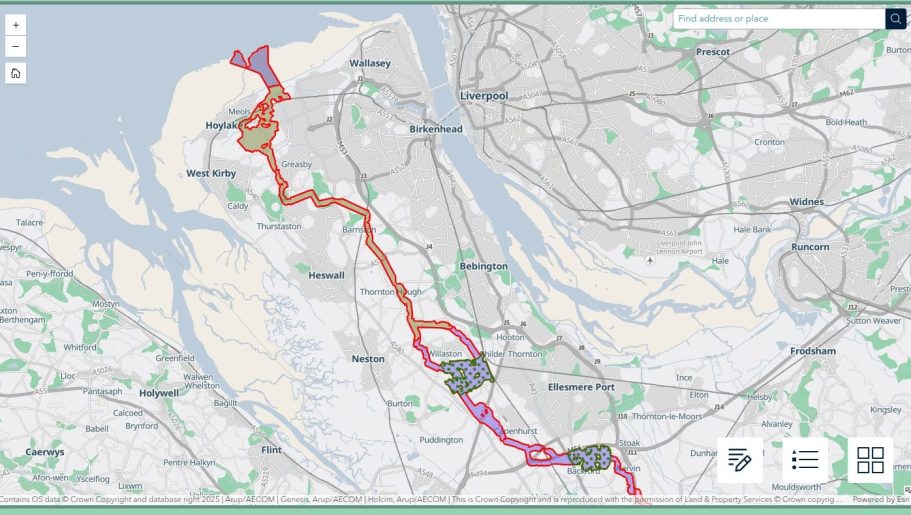
The Peak Cluster project involves the construction of a major carbon dioxide pipeline network from a number of cement and lime industrial sites in and around the Peak District, routed through a 30 - 40m wide strip across large areas of countryside and private land. It will travel from the Peak District through Derbyshire, Staffordshire, Cheshire and the Wirral. The scheme also includes a number of Above Ground Installations (AGIs) along the pipeline route, comprising valve stations, monitoring compounds, compressor facilities and other permanent industrial structures. Captured carbon dioxide would then be compressed in a large scale (54000m2) industrial unit in Meols, Wirral and piped offshore for storage beneath the seabed in the depleted gas fields in Morecambe Bay
Public opposition to this project is rooted in significant environmental, safety, climate and ethical concerns. On land, the construction and operation of the pipeline and AGIs would cause substantial environmental damage, including habitat loss, disruption to wildlife corridors, harm to farmland, damage to watercourses, and degradation of protected and valued landscapes. It would see major widespread disruption to local communities and the long-term industrialisation of the countryside.
There are also serious concerns regarding the undersea elements of the project. The long-term impacts of injecting carbon dioxide beneath the seabed are not fully understood, and the potential risks to marine ecosystems, seabed stability, and fisheries remain uncertain.
Carbon capture and storage at this scale is an unproven technology. There is insufficient long-term evidence that carbon dioxide can be safely contained for the many decades or centuries required. The risks of leakage, pipeline failure, or accidental release raise legitimate safety concerns for communities along the route and for future generations who will inherit
the responsibility and consequences of this infrastructure (both on land and under the sea)
These concerns are reinforced by global experience. Internationally, numerous incidents involving carbon dioxide pipelines have highlighted the potential dangers of this technology.
A CO2 Pipeline in Satartia, Mississippi, ruptured resulting in asphyxiation and hospitalisation of
50 people with many suffering ongoing health issues.
These examples underline the reality that carbon dioxide pipelines are not benign infrastructure.
They are using new and untested technology and failures can have severe consequences for communities.
The project is also heavily reliant on vast levels of public subsidy.
£28.6million has been committed to the peak cluster project through the National Wealth Fund. Projects such as this inevitably end up costing far more than originally planned. Many members of the public question whether this represents responsible use of public money, particularly when the technology remains uncertain and the environmental costs and safety risks are so high.
There are alternative approaches that must be properly considered and prioritised. These include more sustainable and lower-risk forms of carbon reduction and capture, large-scale tree planting and habitat restoration, and fundamental changes to high-emission industries.
Redesigning concrete production, adopting lower-carbon cement technologies, and promoting more sustainable building materials could achieve meaningful emissions reductions without the need for extensive new “fossil-fuel-style” infrastructure.
The government investment in the Peak Cluster Project would be better spent in investing in those UK industries researching and delivering more sustainable concrete technologies and construction materials. Rather than continuing to subsidise large energy and concrete corporations to continue, as they always have done, with their environmentally damaging business operations, the Government should be investing in the sustainable technologies that we need to help us move toward a better future for the planet.
The Peak Cluster Project is estimated to capture 3 million tonnes of Carbon Dioxide per year which is about 0.007-0.008% of total global annual CO2 emissions. In other words, it’s very small relative to the scale of global CO2 emissions — roughly 7-8 parts in 100,000 of the total emitted each year.
Indeed, it is only about 0.8% of the total UK emissions.
This insignificant effect on UK or global emissions is NOT worth the massive amounts of tax payers money being invested in this scheme, or the large scale environmental damage and the substantial harm to the wellbeing of local communities that this project will cause.
This project has caused widespread distress and anxiety among the public. Many residents feel unheard and anxious. They are threatened with the loss of land, and peace of mind, and are deeply concerned about the long-term safety implications and environmental damage.
The psychological impact (and cost to health) of living under the shadow of such a project
should not be underestimated.
Ed Miliband MP and the UK Government need to reject the
Peak Cluster Carbon Dioxide Pipeline / Carbon Capture Project and pursue genuinely sustainable, safe, and publicly supported alternatives to address climate change.
We need your consent to load the translations
We use a third-party service to translate the website content that may collect data about your activity. Please review the details in the privacy policy and accept the service to view the translations.